
Learn how to choose the correct front door opening direction. Discover the differences between inward and outward opening doors, left-hand vs. right-hand doors, and avoid costly installation mistakes.
Why the Door Opening Direction Matters?
When choosing a new front door, most homeowners focus on style, color, material, and security. However, one detail is often overlooked—the door opening direction.
The way your door opens affects not only convenience but also home security, space utilization, emergency evacuation, and even your relationship with neighbors. Choosing the correct opening direction before installation can save time, money, and unnecessary rework.
This guide explains everything you need to know before ordering your new entry door.
Outward Opening Doors: Better Security for Spacious Entrances
An outward-opening door is commonly used in many residential and commercial buildings because it offers several advantages.
Benefits:
1.Provides higher resistance against forced entry.
2.Makes it more difficult for intruders to kick the door inward.
3.Frees up valuable indoor space.
Considerations:
Before selecting an outward-opening door, make sure:
1.The exterior area has enough clearance.
2.The door will not block walkways or emergency exits.
3.It will not interfere with neighbors or pedestrians.
A good habit is to check the outside area before opening the door, especially in apartment buildings or shared corridors.
Inward Opening Doors: Ideal for Limited Exterior Space
An inward-opening door is often the better option when exterior space is limited.
Benefits:
1.Does not occupy public corridors or shared spaces.
2.Complies with the regulations in many residential buildings.
3.Reduces the risk of hitting people passing outside.
Considerations:
Since the door swings into the house, remember to:
1.Leave enough clearance for the door leaf.
2.Arrange furniture away from the swing area.
3.Keep entryways free from obstacles.
Proper interior planning ensures smooth daily use without affecting your home’s layout.
Left-Hand or Right-Hand Door? Follow These Two Simple Rules
Once you’ve decided between inward or outward opening, the next step is determining whether you need a left-hand or right-hand door.
Two simple principles can help:
1. Let the Door Rest Against the Wall
After opening, the door should lie naturally against the nearest wall instead of blocking the entrance or hallway.
2. Avoid Obstructing Public Facilities
Ensure the opened door does not block:
1.Neighboring doors
2. Fire hydrants
3. Emergency exits
4. Public walkways
A properly positioned door improves both convenience and safety.
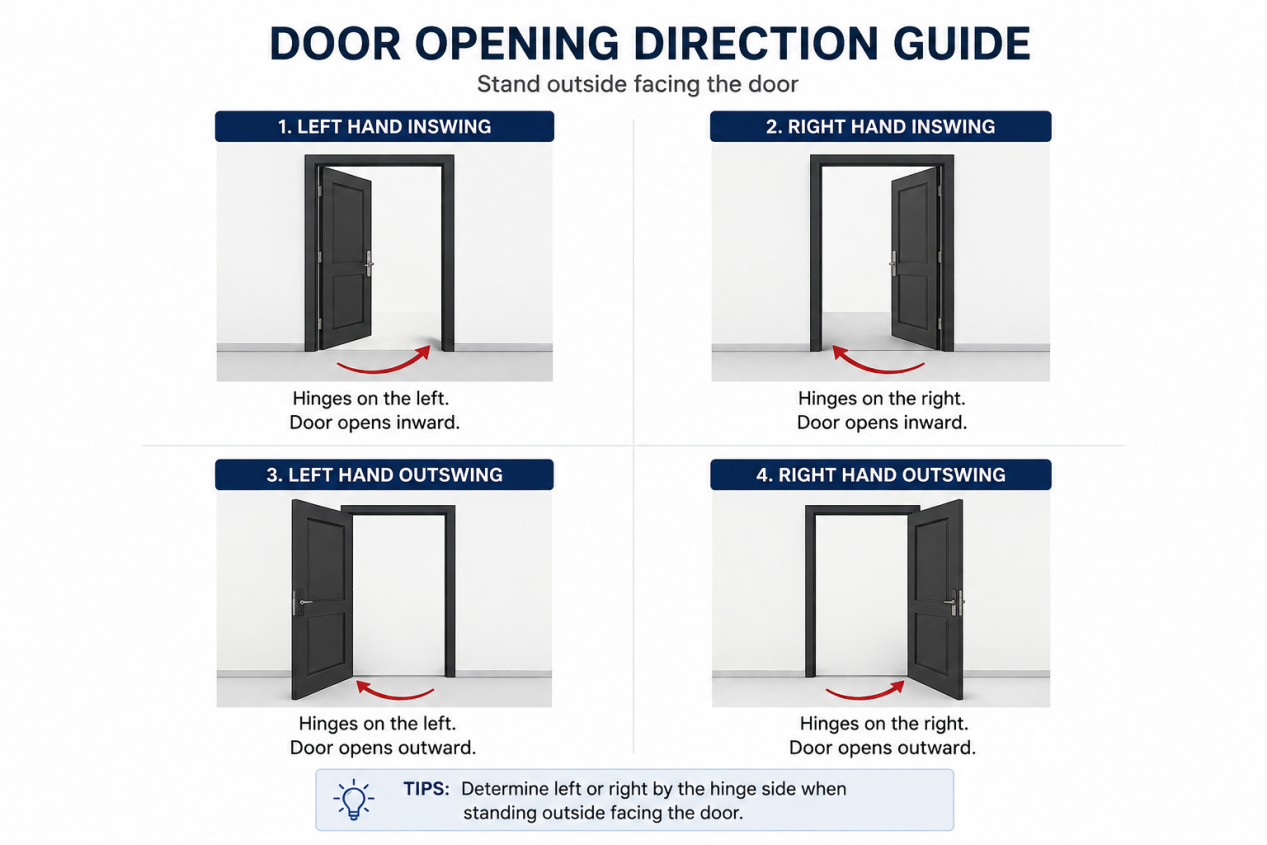
How to Identify the Correct Door Opening Direction?
Many homeowners become confused when ordering a door because they misunderstand the opening direction.
A simple method is:
1. Stand outside the house facing the front door.
2. Determine whether the door opens inward or outward.
3. Observe which side the hinges are located on:
A.Hinges on the left = Left-hand door. B.Hinges on the right = Right-hand door.
Always confirm the swing direction with your supplier before manufacturing begins to avoid costly installation errors.
Final Thoughts
The opening direction of your front door is much more than a technical detail. It influences security, comfort, space efficiency, and everyday convenience.
Before purchasing a new steel security door, take a few minutes to inspect the installation site, evaluate available space, and determine the most practical opening direction. Careful planning today can prevent expensive modifications tomorrow and ensure your new door performs exactly as expected.
A well-designed entrance begins with choosing the right door—and the right way for it to open.



 English
 German
 French
 Russian
 Spanish
 Japanese
 Korean
 Portuguese
 Ukrainian
 Arabic
 Italian