
What Factors Determine the Fire Resistance Rating of a Fireproof Door?
Fireproof doors play a critical role in enhancing the safety and security of buildings during emergencies. These doors are specifically designed to withstand high levels of heat and prevent fire from spreading, offering vital protection. But what factors determine the fire resistance rating of a fireproof door, and how is it tested? Let's explore.
Key Factors That Determine Fire Resistance Ratings
- Material Composition: The materials used in the construction of the door, such as steel, gypsum, or other fire-resistant composites, significantly affect its fire resistance. The core materials are often designed to absorb and dissipate heat effectively.
- Thickness and Density: Thicker and denser fireproof doors generally provide better resistance to heat and flames, as they reduce the chances of fire penetrating through the door.
- Intumescent Seals: These seals expand when exposed to high temperatures, effectively sealing gaps around the door to prevent fire or smoke from passing through.
- Hardware and Glazing: Fire-rated door hardware, including hinges, latches, and vision panels, must also meet specific fire resistance standards. Any glass used in fireproof doors must be heat-resistant and tested for fire performance.
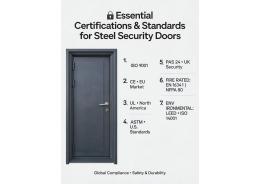
- Certifications and Standards: Fireproof doors are often designed to meet specific industry standards and certifications, like UL 10C or BS 476, which set benchmarks for fire resistance.
How Are Fireproof Doors Tested?
Testing fireproof doors to determine their fire rating involves subjecting them to controlled fire conditions in a laboratory setting. Some of the most common tests include:
- Fire Endurance Test: This test evaluates how long a fireproof door can resist heat and flame penetration under realistic conditions. Doors are exposed to high temperatures for a specific duration, such as 30, 60, or 90 minutes.
- Temperature Rise Test: This test checks how much heat transfers through the door to the cooler side during the rated timeframe. A lower temperature rise rating indicates better insulation.
- Pressure Testing: Ensures that the door can maintain its structural integrity against fire-induced pressure changes within the testing chamber.
Why Fire Resistance Ratings Matter
Fire resistance ratings are crucial for achieving building code compliance and ensuring safety during emergencies. High ratings minimize risks to occupants and property, providing additional time for evacuation and fire suppression.
At PPD Doors, we are committed to providing top-quality fire-rated doors that meet stringent fire safety standards. Visit our website for more information about our product range and certifications.


 English
 German
 French
 Russian
 Spanish
 Japanese
 Korean
 Portuguese
 Ukrainian
 Arabic
 Italian