Can Smart Locks Be Retrofitted to Traditional Steel Security Doors?
As smart home technology becomes increasingly mainstream, many homeowners with traditional steel security doors are curious: Can these reliable, robust doors be upgraded with smart locks to enjoy keyless entry, remote access, and enhanced security? Let’s dive into the feasibility, process, and key considerations of retrofitting smart locks to traditional steel security doors, with insights from PPDDOORS, a leader in door solutions.
1. Understanding Traditional Steel Security Doors
Traditional steel security doors are prized for their durability, impact resistance, and security. They typically feature a sturdy steel frame, reinforced panels, and a standard mechanical lock (e.g., deadbolts, mortise locks). The core question is whether their design accommodates the hardware and power requirements of smart locks.
2. Compatibility: Can Your Steel Door Support a Smart Lock?
Most smart locks can be retrofitted to traditional steel doors, but success depends on three key factors:
- Lock Mechanism Compatibility: Smart locks replace or integrate with the existing lock. Ensure your door’s current lock (e.g., deadbolt, mortise lock) is compatible with the smart lock’s design. Many smart locks are designed to fit standard deadbolt cutouts, while mortise locks may require adapter kits.
- Door Thickness: Steel security doors typically range from 40mm to 60mm in thickness. Most smart locks support doors between 35mm–100mm, so thickness is rarely an issue. Verify the smart lock’s specifications (e.g., PPDDOORS’ smart lock models list compatible thicknesses).
- Hole & Mounting Requirements: Smart locks require specific mounting holes (e.g., for the lock body, latch, and control panel). Traditional steel doors often have pre-drilled holes for mechanical locks, but you may need to drill new holes or adjust the door’s frame. PPDDOORS’ steel doors are engineered with precision, making retrofitting easier for standard smart lock configurations.
3. The Retrofitting Process: Step-by-Step
Retrofitting a smart lock to a traditional steel security door is feasible with careful planning. Here’s a general process:
- Assess Your Door & Existing Lock: Remove the old lock and measure the door’s thickness, backset (distance from the edge of the door to the center of the lock hole), and existing hole dimensions. Cross-reference with the smart lock’s installation requirements.
- Choose a Compatible Smart Lock: Opt for a smart lock that matches your door’s lock type (e.g., deadbolt-compatible, mortise-compatible). Brands like PPDDOORS offer smart locks with adjustable components to fit most steel doors.
- Prepare the Door: If needed, drill new holes or modify the door’s edge to fit the smart lock’s latch and bolt. Ensure the door is clean and free of debris.
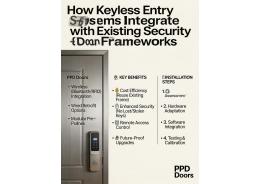
- Install the Smart Lock: Follow the manufacturer’s instructions to attach the lock body, exterior panel, and interior control unit. Connect power (batteries or hardwiring, if supported) and pair with your smart home system (e.g., Wi-Fi, Bluetooth, or a hub).
- Test Thoroughly: Verify the lock’s functionality (e.g., locking/unlocking, app control, passcode entry) and ensure the door aligns properly with the frame to avoid jamming.
4. Key Considerations for Retrofitting
- Power Source: Most smart locks use batteries. Ensure the door’s design allows easy battery replacement (e.g., accessible interior panel). Some models support hardwiring, but this may require professional electrical work.
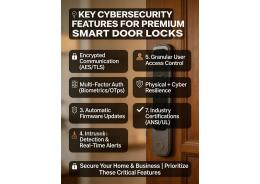
- Security Upgrades: Retrofitting a smart lock should enhance security, not compromise it. Choose a lock with robust encryption (e.g., AES-256), tamper alerts, and multi-factor authentication (e.g., passcodes, biometrics, smartphone access).
- Professional Installation: For complex door designs or if you’re unsure about modifications, consult a professional installer. PPDDOORS offers installation support for their smart lock and door systems, ensuring a seamless upgrade.
- Weather Resistance: Steel doors are often exposed to the elements. Choose a smart lock with an IP rating (e.g., IP65) to resist dust and water, prolonging its lifespan.
5. PPDDOORS’ Role in Smart Lock Retrofitting
PPDDOORS specializes in high-quality steel security doors designed for adaptability. Their doors feature precision-engineered lock holes and reinforced frames, making retrofitting with smart locks straightforward. Additionally, PPDDOORS offers smart lock models tailored to their door systems, ensuring perfect compatibility, enhanced security, and smart home integration.
Conclusion: A Worthwhile Upgrade
Retrofitting a smart lock to a traditional steel security door is not only feasible but also a smart investment in convenience and security. With careful planning, compatible hardware, and support from experts like PPDDOORS, you can transform your reliable steel door into a smart entry point for your home. Explore PPDDOORS’ smart lock solutions to find the perfect fit for your steel security door.
Ready to upgrade? Contact PPDDOORS for personalized advice on retrofitting your steel security door with a smart lock!


 English
 German
 French
 Russian
 Spanish
 Japanese
 Korean
 Portuguese
 Ukrainian
 Arabic
 Italian